Understanding the Atonement Pt 2.
An Unnecessarily Deep Dive into Recapitulation Theory

In my last post about the atonement, we defined some key words and established a bit of a framework for thinking about the atonement. If you haven’t, go read it here.
In this post, we’ll turn our attention to a theory. I had originally intended for this post to be about several theories but… I got carried away and wrote about just one. I’m not sure if we’re setting precedent here or if I just had a lot to say about this particular theory.
If I end up writing this much about each theory, we’ll be here for a while because there are a lot of atonement theories out there. I recently taught a class on atonement theories and covered 12. I don’t plan to cover all of them here because that would be a book and I charge for that kind of thing. My goal is to explore a diversity of theories because I think it can be a helpful way to see the breadth and width of atonement theology while also showcasing how contextual our theories are.
Historic vs. Contextual
We will start with a set of familiar theories. Sometimes these are referred to as the historic theories in contrast to “contextual” theories. This is a bad categorization because it presupposes that some theories are not “contextual” but as we’ll see, all atonement theology is shaped by time and place. We have a bad habit of thinking the familiar is normative and the unfamiliar cultural. I.e. my tradition is historical, theirs is cultural. When the truth is, all theology is contextual.
This isn’t meant to diminish any theory or approach. I genuinely believe that this is a good and beautiful thing and it’s why I like to showcase the history and diversity of theories. It helps see how theology can be a living tradition, a place where faith engages with culture in real time.
So, without further ado, let’s jump into our first theory.
Recapitulation Theory Overview (Irenaeus, 2nd c.)
One of our earliest known atonement theories is linked to the church father, Irenaeus of Lyons, from the 2nd century. Irenaeus was a boss (do we still say that?) worth studying because his writing represents some of the earliest, post-apostolic, theological reflections that we have (St. Irenaeus was a disciple of Polycarp who was a disciple of the apostle John) and is a good window into the theology and thinking of the early church.
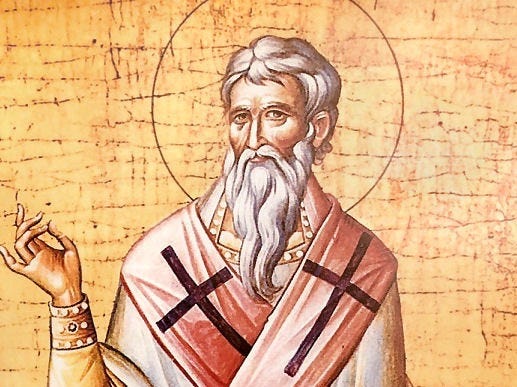
In Recapitulation theory, Irenaeus argued that in his birth, life, and death Jesus “renewed” the human story by becoming a “new Adam” and “new Israel” who succeeded where humanity (old Adam and old Israel) had failed. In his success, Jesus made a way for humanity to reenter a renewed story.
At the heart of Recapitulation theory is the idea that Christ “refreshes,” “redoes,” or “restarts” the human story by entering and living it. In the humanity of Christ, the story of humanity was “renewed” for all of us so that we, in Christ, can live renewed.
In the humanity of Christ, the story of humanity was “renewed” for all of us so that we, in Christ, can live renewed.
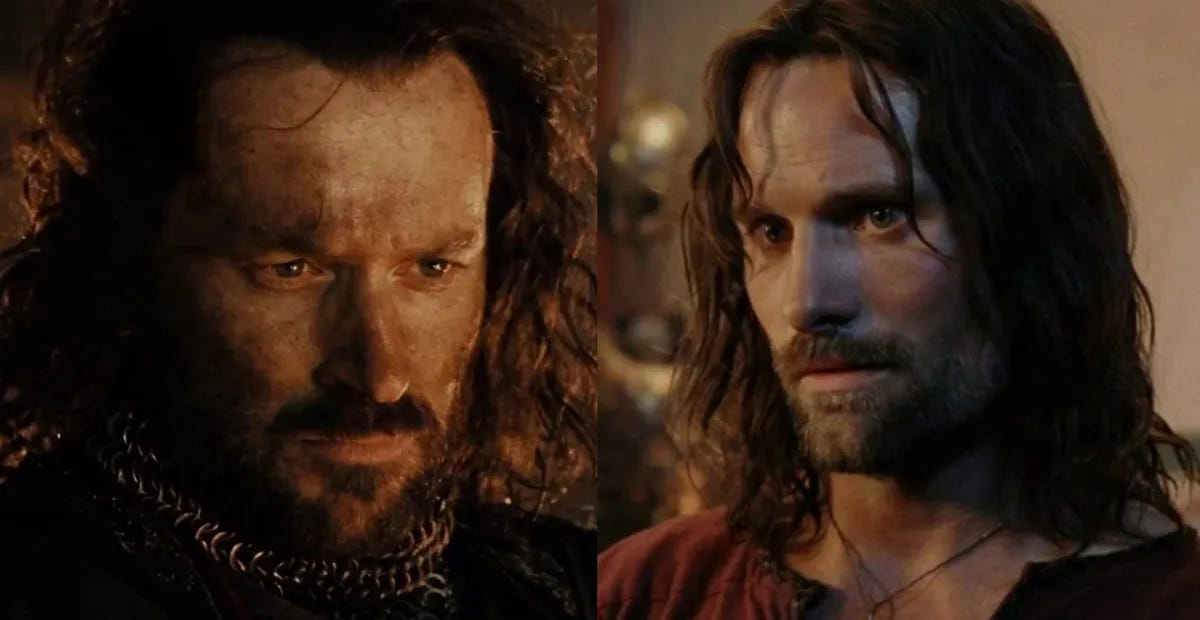
I think about it like this: In the Lord of the Rings (you had to know a LOTRs references was coming), humanity, as represented by Isildur, gave into the power of the One Ring. Failing to destroy the ring, humanity’s story goes awry. They become a scattered and defeated people. Humanity existed on the brink until a new heir arrived. Aragorn, Isildur’s heir, shows up and does what Isildur did not by refusing to give into the power of the ring. Because he succeeded where Isildur failed, he was worthy to take up the throne and restore humanity. Isildur’s (humanity’s) story is recapitulated in Aragorn, meaning it’s relived but this time in goodness.
Now, I need to make an important caveat at this point, “story” is my language/metaphor to help us understand this theory. Irenaeus’s language wasn’t story, but it was similar, he used the metaphor of “summing up” humanity. Which is where the word “recapitulation” comes from and would often speak in the language of history, growth, and restoration which is why I like “story” as a metaphor to capture the central idea here.
One final summary point. Recapitulation theory is unique amongst atonement theories in that it emphasizes our response as a living participation in the way of Christ. Many atonement theories stop at the accomplished work of Christ, but Recapitulation theory is not just about what Jesus did but about how his accomplishment makes way for us to join in his life. He refreshed the story so that we could take back our role as characters within the drama, so to say. In this way, Recapitulation Theory lends itself to formation and discipleship in beautiful ways.
Key Passages
There are verses all over the New Testament that speak to this theory, here are a few:
Romans 5:12–21 “For just as by the one man’s disobedience the many were made sinners, so by the one man’s obedience the many will be made righteous.”
1 Corinthians 15:21–22, 45–49 “For as all die in Adam, so all will be made alive in Christ.”
Hebrews 2:14–18 “Since, therefore, the children share flesh and blood, he himself likewise shared the same things…”
Ephesians 1:9-10, “he has made known to us the mystery of his will, according to his good pleasure that he set forth in Christ, as a plan for the fullness of time, to gather up all things in him, things in heaven and things on earth. In Christ we have also obtained an inheritance, having been destined according to the purpose of him who accomplishes all things according to his counsel and will.”
The Problem to Be Solved
In our first post about the atonement I said we could very loosely categorize the problem an atonement theory is trying to solve as either objective or subjective. Recapitulation theory immediately disrupts that binary. In one sense, Recapitulation theory is objective because Jesus is “redoing” or “restarting” the human story on our behalf. However, Recapitulation theory is also subjective because it emphasizes our involvement in the story. This does not mean salvation begins with our inner experience or effort, but that what Christ has accomplished becomes real for us through lived participation. The better category for Recapitulation theory might be participatory. I like this word because it names the overlap of objective and subjective in this theory. In Jesus, God participates in our story so that we can participate in God’s.
In Jesus, God participates in our story so that we can participate in God’s.
Context
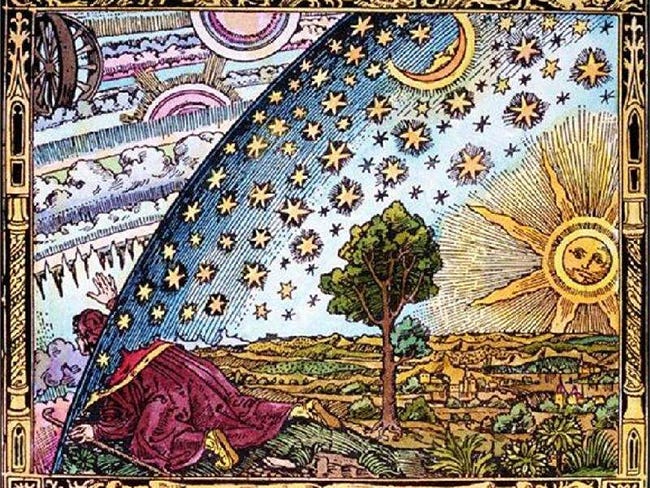
Recapitulation theory emerged amidst a heated theological debate with Gnosticism. To keep this brief, Gnosticism was a popular philosophy that had made its way into the Christian church. Gnosticism taught that the material world was a cage and that our physical existence—bodies, families, food, etc.—was something to be overcome, transcended, and eventually left behind. For Gnostics, enlightenment or salvation was about merging with the immaterial “other.” For some this looked like disembodied spiritual enlightenment for Gnostic Christians it looked like going to a spiritual heaven when you died and leaving material concerns behind (uh oh, sounds like Gnosticism hasn’t gone anywhere).
For Gnostic Christians, the purpose of Jesus’ death was to rescue them from the human condition. But through Recapitulation theory, Irenaeus argued that Jesus had come to heal the human condition. The goal was not escape but renewal.
Recapitulation theory pushed back on Gnosticism by emphasizing the embodied materiality of Christ. For Irenaeus and early Christians our bodies matter, the life we live on earth matters, childhood, and play, and rest, and green hills matter. That’s why Recapitulation theory emphasizes Christ’s entire life and our active participation in his life.
This may seem like a small or niche issue but the debate over materiality raged in the early church for hundreds of years. Irenaeus, his peers, and later students actively debated their counterparts about this issue until the 5th century. These debates, largely, were the cause of the early church councils where theologians debated the nature of Jesus and thus, the nature of salvation.
Criticisms
Recapitulation Theory fell out of popularity as the questions of early Christianity changed. Questions about the humanity of Jesus were “settled” at the councils and were replaced with questions of politics, law, and guilt—in the 4th century, Augustine of Hippo shifted the focus of atonement to the issue of guilt.
Recapitulation Theory didn’t simply disappear; it was, in a sense, absorbed into other atonement theories. Most theories articulate, in some way, that Jesus is a “new Adam” or a “new humanity.”
If we we’re to name key criticisms of this theory I think we could identify 2:
First, Recapitulation theory seems to downplay the actual event of the cross. The cross, according to some critics, seems like an accidental or unintentional event in the life of Christ—one that is not needed for Jesus to “renew” the story of humanity. I.e. the line of criticism goes, “why couldn’t Jesus just live perfectly to save us? Why did he need to die at all?” A response to this criticism would be, because the cross is Jesu's’ most perfect act. It is the moment love meets violence and overcomes it. It is the ultimate moment in which Jesus refuses the power of the ring, so to say.
The cross is the ultimate moment in which Jesus refuses the power of the ring
Second, Recapitulation theory seems vague regarding issues like sin and justice. This is an important criticism to keep in mind. What does this theory say to issues of sin and justice? Does the cross mean anything about evil in the world? Is it a victory against violent empires or racism? Does it forgive debts etc.? Irenaeus would say, “yes!” But something important to note here is that Irenaeus primarily conceived of sin as something that corrupted our ability to participate in the story. Sin malformed us, alienated us from God and others, and wounded us. Atonement overcomes sin through Christ’s act of solidarity with us (restoring relationship) and through his renewing work that heals us and invites us to be reformed into a new story.
Why this Matters for Today
When I set out to write this post, I didn’t intend for it to be one long essay on Recapitulation theory. But the more I dove in the more I found myself taken by this theory. I’ve long been an Irenaeus stan (do we still say that?) and this theory showcases why. His work and writing are beautiful reminders that the good news of Jesus is participatory. In Christ, we are invited into a renewed story, a story we participate in writing with our lives. Hopefully that has come across in all these words.
In summary Recapitulation Theory is a beautiful theory of atonement, and it is worth studying. Here are a few reasons why I think it’s worth studying.
What would you add?
First, it is arguably our oldest known atonement theory and probably best represents the thinking of the early church. This is worth paying attention to as we compare later theories to each other. Like I mentioned earlier, Irenaeus was a student of Polycarp who was a disciple of the Apostle John and that’s just cool.
Second, this theory helps us see how contextual a theory of atonement can be. This theory was engaging with the questions of the 2nd century world. This is true of all the theories we will study together. This isn’t a bad thing; it’s the beauty of a living theology that can engage with new questions.
Third, this theory is deeply rooted in a view of human development and formation. Meaning, Recapitulation Theory invites us to follow Jesus in a way that few other theories do. It calls us to live like Jesus as participants in the new story and to be formed more deeply into our new story.
Fourth, this theory takes physical matter, bodies, history, and human life seriously. I think it has a lot to offer us as we think about trauma, physical health, ability and disability, age and more. If nothing else, it reminds us that the lives we live and the story we tell now, matters.
Fifth, this theory takes the entire story of Jesus seriously and helps us place atonement within the broader story of the Jesus’ life.
Alright, that’s enough of that for now.
Let me know in the comments if you found this helpful, interesting, and if you want more deep dives into atonement theories and theology.
Peace.