Understand Atonement Pt 3: Ransom & Christus Victor
In this post we’re continuing our atonement conversation and exploring two additional atonement theories.

In this post we’re continuing our atonement conversation and exploring two additional atonement theories. If you haven’t, check out my first two posts where we laid some foundation and where we explored our oldest documented theory.
Without further ado, let’s jump in.
Ransom Theory
Ransom Theory is our second oldest atonement theory and though officially documented a century later than Recapitulation Theory was probably on the scene much earlier. This theory is credited to Origen of Alexandria (3rdcentury) and Gregory of Nyssa (4th century).
At the heart of Ransom Theory is the idea that humanity has become enslaved to sin, death, and the devil. Like a conquering empire, these forces, defeated humanity in Genesis 3, taking us and our very will captive. Try as we might to free ourselves from enslavement, this axis of evil was too great a power for humanity to overcome. God though, deeply loves his people, and therefore conspired to free us. To do so, he offered up his son, Jesus, in exchange for our life. The devil, seeing an opportunity to deal a major blow to the power of goodness takes the deal and agrees to the exchange. But what the devil did not know was that Jesus would rise again from the dead pulling the ultimate Oceans 11 style switcheroo on the devil. Just as the devil thought it had won the day, the lights were turned on to reveal the devil was holding an empty bag.
Just as the devil thought it had won the day, the lights were turned on to reveal the devil was holding an empty bag.
Spoiler Alert
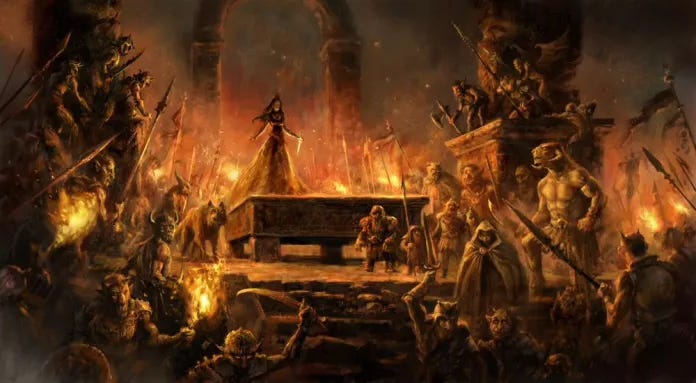
One of the most well-known expressions of this theory comes from C.S. Lewis’s The Lion the Witch and the Wardrobewhere Aslan exchanges his life for Edmunds. In the book, Edmund betrayed his brother and sisters, which meant that–––according to the law of Narnia––his life was forfeit to the witch. To free Edmund, Aslan offered his life in exchange for his to fulfill the demand of the law. The witch, seeing an opportunity to defeat the power of good forever, took the deal and killed Aslan on the stone table as a substitute for Edmund. But the witch did not know that the deep magic of Narnia held a secret clause, that when a willing and innocent victim gave their life for a traitor the stone table would break and death itself would “work backwards.” Thus, Aslan was resurrected and the witch defeated.
Context
Like all atonement theories, Ransom Theory emerged from a context. In ancient Rome, slavery was normative. Scholars estimate that nearly 15-25% of the Roman empire was comprised of enslaved peoples and that up to 30% of the early church were enslaved peoples who had converted to Christianity.
Early Christians, under the boot of Rome, felt the effects of an enslaving power. They saw, firsthand, how a conquering empire wielded its power over the will of the conquered. And they knew, from experience, how difficult it was to overthrow the enslaving tyrant on their own. Atonement as Ransom speaks to the environment of the early church and offered a kind of living metaphor with deep resonance.
This image also had deeply liberating implications and, at times, inspired Christians to press back against systems of slavery. The early church advocated against the practice of slavery and, at its best, treated enslaved peoples as equals within the fellowship of the congregation––records indicate that enslaved people held substantial positions of leadership in the early church.
With that said, it’s also important to note that while I believe Ransom Theory can and did inspire to the church to advocate against systems of slavery it could also be spiritualized and disconnected from material concerns to make spiritual freedom the priority over and above material freedom. The language and metaphor at the heart of Ransom Theory can make it a potent theological frame antidote to the forces of oppression, but that’s IF it holds to the truth that our earthly life matters.
Critiques
Ransom Theory is a beautiful atonement theory and offers a compelling image of sacrificial love. But certain features of this theory open it up legitimate criticism.
The first and primary critique is simply this, why does God have to negotiate with the devil, death, or any other force of darkness when none are God’s equivalent? If God wanted to rescue us why didn’t God just unthink the devil? Why go through the rigmarole of exchange and death? C.S. Lewis handles this issue by talking about the deep magic of Narnia that gives the witch authority. But I, and lots of theologians throughout history, don’t find that answer particularly satisfying. Why would God grant the devil authority over us through the law? Is the devil a just judge? And, if God is all knowing, why would God invent a system that someday would have to be broken by the death of his son?
Why would God invent a system that someday would have to be broken by the death of his son?
This is why the latter reformers (Luther and Calvin) argued that the ultimate problem was not Satan’s claim over humanity, but humanity’s standing before God’s justice––we’ll tackle this on another post.
The second critique of this theory relates to the way it presents the atonement as a kind of shell game God is playing. The entire mechanism (the how) of the atonement is a trick. The devil takes the bait believing Jesus will die, but in the end, is tricked by the power of resurrection. And that, honestly, just feels weird. The entire thing feels mischievous, which I like narratively, but find a little disturbing theologically. What does it mean about God’s nature if God is willing to play so loose with the truth? Does God really need to play tricks with such a lesser being? And, if it’s to honor the law, we’re back at our original question of why? Why write a law you must deceive to get what you want?
Both critiques come to down to questions about God’s nature. Is God powerful and is God good? If God is powerful why negotiate with the devil? If God is good, why play loose with the truth and the law to win? I don’t think either critique necessarily means we should toss Ransom Theory, but they help explain why the theory falls out of broad usage.
Now We’re Talking… Semantics
One final critique, which is less of a critique, and more of an important semantic note is that the word our English Bibles translate Ransom does not necessarily convey the meaning we infer upon the word ransom. Stick with me for a second.
The Greek family of words we translate as ransom are as follows:
ἀντίλυτρον (antilytron) – “corresponding means of release”
λυτρόω (lytroō) – “to redeem / set free”
ἀπολύτρωσις (apolýtrōsis) – “redemption / release”
These words can be translated as “ransom” but that carries with it the notion of exchange (i.e. money exchanged in a ransom payment) whereas the most direct translation is “the means of release” or simply “release.” The emphasis of this word is the outcome of “release” not necessarily the “how” of release.
Here’s a good example of this:
The NIV Bible translates this word in Mark 10:45
“For even the Son of Man did not come to be served, but to serve, and to give his life as a ransom for many.”
Whereas the Common English Bible chooses to translate it like this:
“For the Human One didn’t come to be served but rather to serve and to give his life to liberate many people.”
Same root word, different translations, different implications.
Here’s why this matters. The word itself does not explicitly say “how” it instead focuses on “what” i.e. release. To understand the “how” we are thrust back into the world of theories and constructing from metaphor, imagery, and narrative a “how.” But the word we choose will shape our theory. Ransom implies an exchange, but liberation brings a different implication. Which is why other theories see the atonement more like a rescue mission to liberate humanity from darkness rather than a ransom paid to darkness in exchange for humanity.
Liberation vs. Exchange
Because of this another theory of atonement began to emerge, today we call it Christus Victor. Truthfully, it’s a bit hard to draw a clear line between these two theories or to categorize them chronologically because they share similarities like language, supportive passages, and imagery. Part of the reason it’s difficult to dissect these two theories is that the “title” Christus Victor is a 20th century invention by a Swedish theologian named Gustaf Aulén. Aulén, through study of the early Church writings, concluded that there was a separate and distinct theory of atonement within the larger category of Ransom Theory. This theory, while sharing much with Ransom Theory addresses the key shortfalls of Ransom Theory. Today, Christus Victor is a widely held view of atonement made popular by the writings of well-known scholars like, N.T Wright and Scot McKnight.
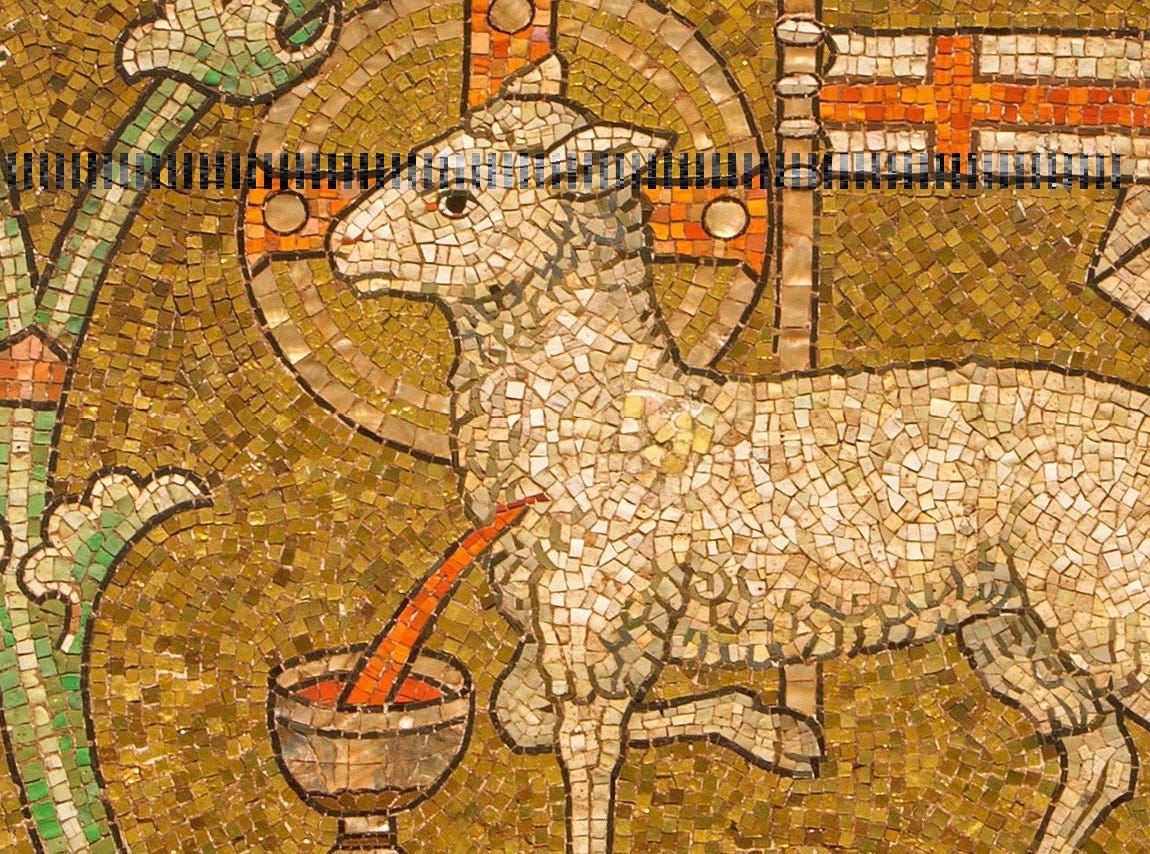
Like Ransom Theory, Christus Victor identifies the problem as the enslavement of humanity to the forces of darkness. Like Ransom Theory it argues that humanity is unable to rescue itself from enslavement. Where it differs from Ransom Theory is in the means of “release.” Christus Victor says that, on the cross, Jesus defeated the powers of death. Jesus did not negotiate or trick evil, he overcame it with sacrificial love. The resurrection was not a shell game to pull the wool over the devil but was instead the definitive power of God overcoming the power of evil, i.e. life and love vs. sin, and fear, and death.
The key distinction here is that in Ransom Theory God pays the devil but Christus Victor understands the atonement as Christ’s decisive victory over the powers of sin, death, and the devil through his death and resurrection.
Key Passages
Below are a few key passages that can, honestly, be used to support either theory. I’ve put our key word in bold so you can see how a simple translation choice can have a big impact on the way we read these verses. If you read each of these verses in different English translations (I’d suggest NIV, NRSVue, and CEB) you can see these choices play out. As you read, try substituting the additional words and reflect on the way it shapes meaning.
1 Timothy 2:5-6 “For there is one God and one mediator between God and mankind, the man Christ Jesus, who gave himself as a ransom [means of release] for all people. This has now been witnessed to at the proper time.”
Colossians 1:13–14 “He has rescued us from the power of darkness and transferred[ransomed/released/liberated] us into the kingdom of his beloved Son, in whom we have redemption, the forgiveness of sins.”
Mark 10:45 “For even the Son of Man did not come to be served, but to serve, and to give his life as a ransom [to liberate/means of release] for many.”
Translators have a tricky job. They must decide which word makes the most sense based upon historical research and context. But their choices have an impact. That’s not a bad thing but it is a real thing we must consider as we study and read.
Each of these passages comes within an important context. In 1 Timothy, this passage is a part of a larger argument about Jesus’ role as a mediator between God and humanity. It reads, almost like a credal statement that the early church might have rehearsed together. Colossians likewise reads like a statement or a hymn the early church might have sung and is a beautiful encapsulation of our faith. But the verses themselves and the larger context focuses a lot on Jesus’ authority over all things. That lends credence to Christus Victor, and the idea that the cross is a victory over evil. The Mark passage is maybe the most peculiar. Jesus is describing the purpose of his death but immediately preceding this verse, Jesus overhears his disciples arguing about who will be the greatest in the Kingdom of Heaven. In response he says, don’t be like earthly rulers who wield power coercively, but instead,
“whoever wishes to become great among you must be your servant, and whoever wishes to be first among you must be slave of all. For the Son of Man came not to be served but to serve and to give his life a ransom for many” Mark 10:43-45.
Jesus is connecting his atoning sacrifice with power and specifically, a different kind of power than is wielded by the authorities of their day and ours. It is a revelation of God’s power AND, in context, an invitation for us to pick up a different kind of power––a cross shaped one.
That doesn’t mean this passage can’t support Ransom Theory or Christus Victor, but it should color how we see those theories and more importantly, how we understand the Atonement as a whole.
Why this Matters Today
There is a lot more that could be said about these theories especially Christus Victor. It is one of the most helpful and rooted theories of atonement. I’ll attack a few recommended resources below for further study.
But, with all that said what’s are take away here?
First, each time we explore atonement theories I hope to show you, in a broad way, how biblical interpretation and theology works. Translators, teachers, and theologians are making informed choices than impact the choices we make. That’s not bad, I am so grateful for the work of translators and theologians, but we got to remember we don’t read tabula rasa. We are always reading with and from community whether we realize it or not (I discuss this with Dr. Dennis Edwards)
Second, as I’ve already mentioned, I like looking at the history of atonement theories to see how they develop overtime. In post 2, we explored Recapitulation Theory which shares some meaningful elements with these two theories but at the same time is very different. That means the Church’s primary view of atonement has changed overtime. Does that mean atonement has changed? No, but it should make us a bit humbler about our theories. I also think it’s beautiful because we are invited, with our tradition, to continue interpreting and applying the atonement in humble, creative, and contextual ways today.
Finally, Ransom Theory and Christus Victor remind us that the atonement is not only about forgiveness, but about freedom.
These theories name something many of us feel intuitively—that sin, death, fear, violence, addiction, and injustice are enslaving powers. They shape our lives in ways we cannot simply think or behave our way out of. They hold us captive.
The good news of the cross, according to these theories, is that God does not merely forgive us from a distance. In Christ, God confronts the forces that enslave humanity and overcomes them through sacrificial love and resurrection life.
This matters because it reminds us that evil does not get the final word. Death does not get the final word. Fear does not get the final word. Love does.
Christus Victor in particular reminds us that the resurrection is not just proof of life after death, but a declaration that the powers of darkness have been defeated.
And if Christ has defeated these powers, then we are invited to live as liberated people—no longer enslaved to fear, sin, or death, but free to participate in the life of God.
If Christ has defeated these powers, then we are invited to live as liberated people—no longer enslaved to fear, sin, or death, but free to participate in the life of God.
Alright, that’s enough of that for now.
Let me know if this was helpful or if I missed anything.
Leave a comment with any question, thoughts, or outburst of emotion!
Additional Resources:
Podcasts:
OnScript Podcast — Episode 200: Fleming Rutledge — The Crucifixion, Advent, and the Powers
Beer Christianity Podcast — Episode 42: “Christus Victor vs Penal Substitution” (with N.T. Wright)
How Does the Christus Victor Model of Atonement Deal with Sin? (podcast) with Greg Boyd
Article:
Books:
Gustaf Aulén — Christus Victor
Fleming Rutledge — The Crucifixion
Michael J. Gorman — Atonement: A Guide for the Perplexed
N.T. Wright –– The Day The Revolution Began